Friday, May 30, 2008

Investigation into the Death of Sam Vasquez Concluded

Austin, TX - May 30, 2008


The Texas Department of Licensing and Regulation has released their report outlining the investigation into the death of MMA competitor Sam Vasquez. The conclusion reached is that the MMA event in which Vasquez competed was conducted in accordance with all of the rules and protocols set forth in the Combative Sports Program.


Vasquez participated in the Renegades Extreme Fighting event at the Toyota Center in Houston on October 20th of last year and was immediately taken to the hospital after his contest against Vince Libardi. Upon examination it was determined that the Houston-based fighter was suffering from swelling in the brain, at which time several surgical procedures were performed to relieve the pressure. His condition began to worsen and he was placed into hospice care. He died on November 30th, 2007.


In April 2008, the autopsy report filed by the Harris County Medical Examiner’s Office revealed the cause of death to be “complications of blunt trauma of head with subdural hemorrhage” and the death was ruled accidental.


Lee Parham, Business and Occupations Section Manager for the TDLR, presented his report (available at http://www.license.state.tx.us/) and answered questions from the media present. The report outlines the action that took place in the bout between Vasquez and Libardi, broken down by round, and the subsequent timeline of events leading from the bout stoppage to Vasquez’s arrival at the hospital. All post-fight response from event staff and medical officials on hand was found to be well within the standards set forth by the TDLR. Medical Advisory Committee member Dr. Ivan Melendez went on to describe the performance of the staff on hand as exemplary. “I don’t think you’d ever hear about someone falling off a ladder at home and being in the emergency room 14 minutes later,” said Melendez.


While the eventual death of Vasquez cannot be linked definitively to any one blow encountered in the bout, the report does describe a takedown in the first round in which he struck the back left side of his head on a cage post. Dr. Melendez did hypothesize that this blow could have been the major contributor to Vasquez’s subsequent brain swelling. In the pursuant discussion of the report Parham revealed that the TDLR will investigate implementing minimums on the thickness of cage post padding, which currently have no required specifications.


The final chapter of Sam Vasquez’s life has been closed but the repercussions will resonate in the months and years to come, not just for his family and friends but for fans of combative sports. His legacy is in illustrating that even when everything works as planned and everyone performs as they should there can still be tragic endings. Our condolences go out to all those effected by his passing.


Jason Tiefel, editor

Sunday, April 13, 2008

YAMMA Pit Fighting – It’s Got Electrolytes!

by Jason Tiefel, Editor

The much-anticipated inaugural event for YAMMA Pit fighting, brainchild of (in)famous MMA pioneer Bob Meyrowitz, was held in Atlantic City, NJ this weekend. When I say much-anticipated I mean for all of the wrong reasons. Many hardcore MMA fans were practically salivating at the potential hilarity that might ensue once this mysterious new fighting arena was unleashed on the world. Would this event rival be the ironically hysterical three ring circus that was K-1 Dynamite! USA? Would Butterbean roll down the incline of the YAMMA like a gravy-filled egg? Would Pat Smith say he’s been working on his ground game “just a little bit” in his post fight interview? The possibility for schadenfreude-tastic ridicule seemed limitless.


What transpired was actually the worst-case scenario for Meyrowitz: YAMMA was neither relevant to the MMA landscape nor was it ridiculous enough to entertain. What fans received was an 8 man heavyweight tournament with very little action of note and a few “Masters Series” bouts that failed to garner even the slightest bit of nostalgia in this longtime fan’s heart. To the fans that have discovered the sport in the last 5 years or so, this card was a veritable “Who’s That?” of mixed martial arts, featuring relatively unknown fighters comingled with once-great fighters like Mark Kerr and Ricco Rodriguez. It was an odd collection to say the least.


The ultimate irony of this experiment is the YAMMA itself: the event and the fighting area were designed to force exciting fights by eliminating clinching and pinning against the cage. The incline of the YAMMA, coupled with the absurd single 5 minute round bout structure, ultimately favored wrestlers that take opponents down and control from top position. Once fighters clinched and approached the incline, the elevation of the opponent’s legs made takedowns much easier. In the heavyweight tournament, the short bout time allowed Travis Wiuff to repeatedly take his opponents down and simply control for 5 minutes. Unsurprisingly, Wiuff won all of his fights by decision.


In an interview with Sherdog.com, Meyrowitz stated that they plan on their next event in June and that it will take several events to figure out the riddle of the YAMMA. With their first event in the bag the questions still linger as to how viable this promotion is and if it has a place in the current MMA landscape. The marketing and production was certainly an attempt at a throwback to the early days of MMA as spectacle, but this event fell far short of inspiring anything other than a desire to know who they think their audience is.

Thursday, April 10, 2008

TDLR Rule Change too costly for amateur MMA in Texas?

by Jason Tiefel, Editor

Effective March 1, 2008 the Texas Department of Licensing and Regulation passed an administrative rule change that requires amateur MMA organizations to provide increased medical coverage and death benefits to fighters. The previous requirements of $20,000 medical coverage and $50,000 death benefit are now raised to $50,000 and $100,000, respectively. While it would seem that a more robust program for medical coverage would only benefit the safety of the fighters and foster the growth of the sport, it comes at a cost that leaves some promoters questioning the viability of amateur MMA in Texas.


This motion, proposed in October of 2007, was initially tabled largely due to objections from Texas Amateur Mixed Martial Arts Association president Chip Thornsburg. “My original argument was that this measure was prohibitively expensive for amateur organizations,” states Thornsburg. “The increase in operating cost is going to be around $2000 or more. When you’re talking about $20 tickets for an amateur event, that’s another 100 people you have to get just to cover the increased cost. When some amateur events average around 500 people attending, that is a significant gap to cover.” This sentiment was echoed by some on the TXMMA.COM message board in a topic titled “Amateur MMA on life support in TX.”


While promoters are often maligned wholesale by hardcore MMA fans as merely profit seeking off of the blood and sweat of fighters, there are economic realities that are brought to bear anytime an event is put together. Amateur organizations like TAMMA are typically non-profit groups that are essential to the vitality and growth of MMA. A promoter having the ability to manage costs and hold events gives fighters the avenues for displaying their skills and developing as athletes. According to Thornsburg, TAMMA events have produced bottom lines that range from $3400 profit to $2700 losses. Given these erratic figures, a 200-300% increase in operating costs is an understandable concern.


Not all promoters of amateur events are predicting ill effects from this change. Steve Armstrong, President of TAMI Amateur Combative Sports Promotion, Inc. remains positive. “Truthfully, $2000 is a lot of money to come up with for amateur organizations, but this will separate the men from the boys. There are a lot of promoters out there that don’t do right by the fighters. You’ll have to be even more committed now to put on an event. Guys like Chip and me have been doing this for awhile and we’ll find a way to adapt and move on with this.”


This measure puts Texas in a unique position when it comes to insurance requirements. The Nevada State Athletic Commission, considered to be one of the most well established and robust regulatory entities for combative sports, has a similar requirement of $50,000 medical coverage but requires no death benefit (NAC 467.149). Taking this kind of step leaves one to wonder as to the timing and reasoning behind this decision. Part of Thornsburg’s argument against the measure centered on the subtle but important differences in TAMMA’s rule set, namely the use of heavier gloves and the prohibiting of elbows and reinforced knees to the head. These factors should reduce the amount of injuries sustained in competition, so some see this step as perhaps a bit premature given the infancy of the sport.


At first glance one could speculate that the tragic passing of Sam Vasquez last year has created an overly reactionary climate in our state regulatory commission. Greg Alvarez, program manager for the TDLR’s combative sports program, dismisses any connection between increased insurance requirements and the death of Sam Vasquez. “The beginnings of this rule amendment date back to August of 2007, well before Sam Vasquez’s tragic passing. At the TDLR our primary concern is the health and safety of the fighters, and we strive for consistency in how events are regulated. This change puts the numbers for amateur events in line with those of the professional organizations.”


When asked about the objections of TAMMA and the effects of this measure on an amateur organization’s ability to put on shows, Alvarez is optimistic. “There are several companies that will offer $100K death benefits, and the TDLR has set no minimum requirements for the deductibles. An organization looking to keep operating cost down has the ability to choose a plan with higher deductibles, which will significantly reduce the cost of the insurance policy. The deductible is the biggest factor in policy cost, and we have not set restrictions on that.”


As fans and participants of combative sports, we all face the challenge of finding the right balance between what is best for the fighters’ health and safety and what is economically feasible. It would be difficult to find anyone that would disagree with giving fighters the best coverage money can buy, but this is a “perfect world” scenario. Real world constraints require that promoters manage cost and turn profit on their events to be able to continue giving fighters the opportunity to develop. No doubt Texas has taken an important step in developing a more robust program to protect fighters, and only time will tell if there will be any tangential effects that hinder the growth of amateur MMA in Texas.

Sunday, April 6, 2008

Shalorus Captures King of Kombat Welterweight Title

By Jason Tiefel, Editor


Austin, TX, April 5 – World Class Cage Fighting hosted their third fight card, one that was full of action and first round finishes.


In the main event, Kamal Shalorus captured the King of Kombat welterweight title in a quick domination of Oklahoma’s Jeff Davis. The difference in strength and explosiveness was clear from the outset, as Relson Gracie student Shalorus backed Davis up with several quick combinations. A missed kick from Team Elite’s Davis gave Shalorus the opportunity to take the fight to the ground, where he proceeded to drop several punishing shots from top position. The referee decided to save Davis from further punishment and called a stop to the bout at 1:06 in the first.


In the only heavyweight bout of the night (or superheavyweight, as the WCCF prefers to call it) Austin’s Mathew Thompson lost a plodding split decision to Amarillo’s experienced Chris Guillen. Rounds 1 and 2 played out in a similar fashion, with Guillen putting Thompson on his back early while the South Austin Gym fighter worked for submissions from the bottom. Thompson was able to take round 3 by taking Guillen’s back, landing some strikes, and eventually rolling for a heel hook/kneebar. Time ran out on the Austin fighter and Guillen was awarded a 29-28 victory on two of the judges’ score cards.


In somewhat of an upset, veteran fighter Brandon McDowell succumbed to strikes from Grappler’s Lair fighter Patrick Miller at 4:13 in the first round. McDowell scored a takedown early in the round but was reversed by Miller, who was able to maintain top position throughout the fight. Miller, a US Army soldier who just returned from Iraq, landed several hard shots to the left side of McDowell’s head, forcing him to tapout. As McDowell rose, the source of his demise became clear: his left ear, exhibiting the typical cauliflower effect found in many fighters, had swollen to 2-3 times its normal size.


In perhaps the most competitive bout of the night, Grappler’s Domain fighter Duece King defeated Death Row MMA’s Lane Yarbrough via unanimous decision. Yarbrough came out strong in the first, attempting a flying knee that missed and quickly taking Deuce’s back. Duece then grabbed his opponent’s head and flipped him to the mat. After several minutes of groundwork, the fighters returned to the feet where Duece landed the better of the strikes. Yarbrough was able to rally late in the round, slamming his opponent to the mat and taking his back. He worked for a rear naked choke that never came as the first stanza came to a close.


Round 2 belonged to Duece as he landed heavy strikes that kept his opponent on the defensive. He landed a stiff left jab that dropped Yarbrough, but after a sloppy armbar attempt by Duece his opponent was able to recover. Yarbrough began to look gassed as he continued to take punishment on the feet for the duration of the second.


Yarbrough regrouped and was more methodical in round 3, where he picked his shots and landed several high kicks and solid body shots, but it was too little too late. Duece did not offer much in this round, but had already pulled far enough ahead on the judges’ scorecards to be granted a 29-28 unanimous decision.


Duece’s post-fight interview setup a future bout with well-established local fighter Nick “the Ghost” Gonzalez. There has been trash talking back and forth between these two for a while and Gonzalez took the opportunity to enter the cage and challenge Duece. This fight is currently scheduled for the June King of Kombat show and should be a barn-burner.


Relson Gracie Academy’s Ryan Larson needed only 1:03 to dispatch his opponent, the tough Maxwell Smith out of Denver. Smith tossed Larson to the canvas only to find himself on the business end of a well-executed triangle choke. Larson improves his record to 4-0 and establishes himself as a solid local prospect.


Oklahoma’s Jared Hess may be a talented wrestler, but he showcased some solid striking skills in his defeat of Chief Flores. These two came to bang and threw some heavy leather at the starting bell. Hess landed a stiff left jab and some solid knees from the clinch before taking his opponent to the mat. The ref stepped in at the sight of blood and halted the bout to give the doctor a chance to evaluate Flores. The bout continued but Flores again found himself on the bottom of Hess, who delivered enough damage from the top for the ref to stop the fight at 1:52 in the first.


If there was a theme to tonight’s card, it was that Relson Gracie students know how to apply a triangle choke. The academy’s Randy Vera submitted San Antonio’s Adrian Sanchez by applying a very quick triangle that forced his opponent to tap at 1:58 in the first.


Corpus Christi’s Conan Cano submitted his opponent Ryan Carranza by armbar in just 42 seconds, giving the Austin crowd yet another quick finish. Carranza, fighting out of Solidarity MMA in San Marcos, was a late replacement for Chidi Njokunani (whose name was still on the event schedules handed out at the event).


No fight card is complete without some controversy, and tonight’s came courtesy of Dallas’ Ralph Calvillo. His opponent, Selma’s Chris Kuntschik, came out swinging and attempted a double leg takedown that was stuffed by Calvillo. The Dallas fighter applied a standing guillotine choke and Kuntschik dropped to guard, which only served to make the choke tighter. He was able to weather the storm and regain the standing position, but a heated exchange resulted in an accidental thumb in the eye that sent him doubled over against the cage. The ref did not see the infraction and Calvillo swarmed his opponent with punches until the bout was stopped at 1:49 in the first. In response to his opponent’s protests, Calvillo (the self proclaimed “most hated man in Texas MMA”) called for a rematch, so look for these two to meet again in upcoming events.


Grappler’s Domain fighter Garrette Bennette kicked the night off with a dominating performance over Waco’s Louis Sims Jr. Sims’ only moment came with an early right hand that did not seem to faze Bennette as he took his opponent down with a transition from a single to a double leg takedown. Bennette’s attempt at a kimura from half guard did not result in a submission, but he was able to use it to transition to mount. From there he landed enough strikes to force his opponent to tap at 2:51 of round one.


With this event, WCCF is quickly establishing a reputation for putting on quality fight cards. The show had solid production values, a good turnout and all of the athletes were impressive in both victory and defeat. No doubt the Relson Gracie Academy made the strongest showing, with all three of their fighters ending their bouts quickly. New champions were crowned and fans got to experience how great the local MMA scene in Texas has become.

Monday, March 10, 2008

From Russia With...More Frustration


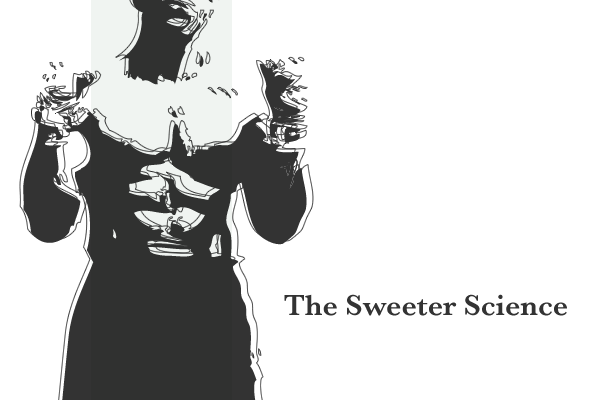
These are exciting and frustrating times for fans of Fedor Emelianenko. Reports have surfaced through most major media outlets that the Russian heavyweight is again a free agent, causing many to speculate just what has become of the M-1 organization that was being built on top of his accomplishments. This picture can be considered a visual representation of Emelianenko's career as of late: a lot of sitting idly with a huge legacy slipping off of his shoulders.


Announced in October of last year, M-1 Global was an interesting but ultimately risky and doomed-to-fail prospect. While fans were simply excited about the potential for the much-revered Russian to fight again, many of us were ultimately skeptical of the idea that you can build an organization on the shoulders of one fighter. Although no official statements have been made, it is clear that internal struggle between the US and European offices of M-1 are likely the cause of Fedor’s current return into the free market. It does not bode well that M-1 has yet to announce a fight card since their press conference last year.


The question now for fans is the same one posed after the downfall of Pride: what now for Fedor? The highly public negotiation process with Zuffa last year did not end amicably, with Dana White calling Fedor’s management “crazy Russians” and Fedor’s camp stating that White is not someone they want to work with. If Fedor were to enter the Octagon, he will likely not be facing Randy Couture anytime soon as the former UFC champ is wrapped up in litigation with Zuffa. Fedor will be entering a rather anemic division fronted by a champion he has already defeated twice in Antonio Rodrigo Nogueira. Aside from a fight with former champ Tim Sylvia, there is little of interest in the UFC for the Russian. Fedor signing with Zuffa also prevents a matchup with one of the few qualified heavyweights that he has yet to fight: Josh Barnett. Dana White has stated several times that he is uninterested in even tabling an offer to former UFC champion Barnett. Anything is possible when money is involved, so it will be interesting to see how negotiations go the second time around.


Fedor’s prospects of fighting top competition are even more grim outside the UFC. EliteXC is still searching for top heavyweights while building up their star prospect, Kevin “Kimbo Slice” Ferguson. Kimbo is perhaps several years away from qualifying for a legitimate bout with Emelianenko, but in divisions lacking top contenders this does not mean it won’t happen sooner. The rest of the talented heavyweights are strewn about the MMA landscape and it will be difficult for Fedor to find consistent competition.


What this comes down to is the rapidly diminishing legacy of one of MMA’s most dominant fighters. MMA is a sport like most others: it is a confluence of money, power, politics, and athletic talent. As the quest for true mainstream acceptance continues, it will indeed be a shame if these elements cannot come together to give us the fights we all want to see.

Sunday, February 17, 2008

The Eugene Robinson Interview: Part III

This is our final installment of the Eugene Robinson interview. Eugene talks about the reason we exist: MMA.


PART III: M to the M to the A


TSS: What does the perfect MMA look like to you? Do you prefer how the spectacle evolved into sport or do you prefer the Vale Tudo days and the Rio Heroes of the world?


ER: Well, I want to get rid of the cage. I was undecided for a long time about that but I’ve seen way too many guys get jammed up against the corner of that cage and the action stalls. Then it becomes a discretionary issue of whether or not the ref will stand them up. I am perfectly happy with the Pride method of pulling fighters back into the center of the ring in the same position. It’s a faster game without so much reliance on that third man in the ring.


I’d like to see striking a downed victim come back...or downed competitors I should say (laughs).


TSS: So what do you think of Rio Heroes, those sort of throwbacks to the early vale tudo days?


ER: I really like Rio Heroes, but it’s interesting because have you seen how guys fight when they don’t have their hands protected? They really don’t hit very hard because it hurts (laughs). I found that to be really compelling but it’s not as cinematic, so that won’t happen. The only thing I was glad to see go was the headbutts. That’s not a technique…anyone with a head can do that. Most people have legs but they can’t do an omoplata. But I’d like no cage, no gloves, and striking a downed opponent.


TSS: I prefer the way the sport has evolved under the unified rules because it emphasizes the athleticism and technique over sheer brutality. Some of the techniques used in vale tudo are more about viciousness…


ER: Like what techniques?


TSS: Well…soccer kicks I can do without. Very rarely to they stop an opponent that was not already injured beyond continuing. Elbows I go back and forth on because of the tendency to open ancillary cuts that result in stoppages. It is unfortunate to see a fighter dominating a fight and get barely clipped with an elbow and lose on a stoppage. MMA to me is about answering the question “who’s the better fighter?” When stoppages like that occur it is inconclusive and unsatisfying for all parties. Ultimately I think they should stay because that case is more the exception than the rule.


ER: Well this is where it gets kind of weird because I think they’ve been stopping the fights too early because of the blood looking bad on TV. That last Nick Diaz fight should have continued. If the guy can hop right up and protest it should have gone on. It’s unfortunate to see a guy like Nick get denied the chance to come back. When you look at that last Gonzaga fight, after he broke his nose the ref asked him if he wanted to continue and you could tell he wanted out. That fight was allowed to go on.


TSS: So who’s the best fighter in the world right now, pound for pound?


ER: Oh man, with MMA it’s so tough…I’d have to go with Fedor.


TSS: I was wondering if you’d subscribe to the school of thought that suggests he be dropped due to lack of quality competition in the last year and a half.


ER: Well, that happens. That’s the business end of the sport. I mean, is he ducking Randy? Absolutely not. I think he’s an amazing fighter and the fact that Zuffa didn’t make that deal happen is a travesty.


TSS: Well, they are 100% concerned with the UFC brand, not necessarily what is best for the sport as a whole.


ER: They’ve proven to be largely independent but they’ve also shown that they can take virtual unknown and unproven fighters and make them stars. I like Forrest Griffin and all, but to me he’s still a TV fighter. What was that last fight he had…


TSS: Well he did fight Shogun and finished him.


ER: Oh, man…that smelled so bad to me. I hate to be a conspiracy theorist, but that was highly suspect. Playing devil’s advocate, if you were going to fix a fight, how would you do it? You could fake an injury or something but that would involve the complicity of other people. The only way you can really do it is to gas. Then all the mistakes you make after that make sense to the masses. I mean c’mon…Shogun get’s rear naked choked out? At that level you just don’t see that very often.


TSS: Well, it did happen at 14 minutes plus in the bout. When guys are gassed and/or hurt that’s when you tend to see that. But don’t you think that the stakes are so high that if it ever came out that Zuffa had fixed a fight it would be disastrous? Why would any promotion in the U.S. risk that?


ER: Yeah, but we’ve seen stinky things before. A decision is announced and the crowd boos and all of a sudden there was a miscalculation on the score cards. Look at the Hammill/Bisping fight. That was pretty suspect, but their big mistake there was thinking that people from Manchester gave a shit about someone from London. When they announced Bisping the winner the entire crowd booed.


At the UFC 79 post fight press conference someone asked why Pride fighters are doing so poorly in the UFC and Dana said it was “Octagon jitters.” Oh, really? Quinton Jackson was sitting in the room and he fought in front of 65,000 people at the Tokyo Dome. I know it’s reaching, but I’m enough of a paranoid lunatic to play devil’s advocate (laughs).


Check out Eugene Robinson’s work:
Oxbow: http://www.theoxbow.com/
FIGHT: http://www.eugenesrobinson.com/
Combat Radio: http://combatmusicradio.com/

Thursday, February 14, 2008

Eugene Robinson Interview: Part II

We continue our compelling discussion with author Eugene Robinson on the topic of fighting and its consequences.

PART II: WHOSE FIST IS THIS, ANYWAY?

TSS: These kinds of behaviors are not uniquely human, at least in terms of the violence itself…


ER: I disagree, but go ahead.


TSS: Oh, really?


ER: Yeah, I think the violence part is uniquely human. David Grossman writes that the way humans employ violence to solve their problems is markedly different than the way animals do it.


TSS: It is, but violence in and of itself is not uniquely human however our ways of intellectualizing it are, and providing meaning and context to it. At any point in researching for the book did you find yourself disagreeing with the way some of these guys were intellectualizing their violent proclivities?


ER: Prior to meeting him, I had the hardest time with Kevin Weeks (Weeks was a lieutenant in James “Whitey” Bulger’s Boston mob set, the Mafioso that provided the basis for Martin Scorcese’s crime film The Departed –ed.). In terms of the story arc I had a hard time making sense of why I would want to put what I thought might be a convicted murderer in the book. What he has done in his life far exceeds any meditation on interpersonal combat. After reading his book I thought he might have an important perspective on the Irish immigrant experience and the urban experience, plus he had 70+ fights with only two losses. He was nothing if not a competitor and I found myself running out of reasons to exclude him.


It got really confusing because I liked the guy, but I wanted to ensure that I didn’t end up lionizing what I believe to be substandard behaviors. I grew to understand that in the context of his universe, his oath of service was much like a soldier’s. I’m still trying to make sense of it and so is he, which is what makes him such an interesting character study. How he’s attempted to square himself with his past I think is honorable. Less interesting to me is how he’s trying to fashion a future out of it. It’s the whole lion in winter syndrome, you know…what happens to the aging tough guy? Which interests me because I’m an aging tough guy (laughs).


TSS: As you get older do you struggle with your past behaviors, which at the time were necessity but are now a commodity you're selling?


ER: I don’t really know if they were ever necessity. There’s not a single fight that I’ve had that I couldn’t have walked away from. The thing is that this stuff is in your blood. Just like the example of the guy talking too loud in the next booth, I’m telling him to shut up 100% of the time. I am constitutionally disinclined to let that kind of behavior slide because it’s a subtle form of bullying. He’s breaking the social contract, which is in place everywhere at all times. All of these other people are modulating their voices…if they were at home, they’d probably be louder. They’re adhering to the social contract. I'm not remorseful about my past choices and I'm using them to tell a story.


TSS: Do you see these lines as universal and immutable, or do they vary from person to person?


ER: I see them as universal and immutable. It’s just like good art or pornography…I know it when I see it. This is when our animal natures actively and healthily come into play. Everyone can feel that temperature change when you know you’re in the presence of a bully. When someone is violating the social contract, we all know it and have our choice of response.


TSS: We all have those lines, whether we draw them intuitively or they are universal. In Chapter 13, titled “I Killed a Man,” we get a glimpse of what happens when that ultimate line is crossed and a fight ends in a fatality. The rest of the book is a fun ride filled with knife-wielding commandos, bar fighters, etc. and then you throw this curve ball in there…


ER: Yeah, I wanted a chapter that would make people stop laughing for 5 seconds. I wanted the reader to know that I know what the logical extension of all this stuff is, you know, sh*t like this…that a daughter’s father is dead on the sidewalk at 3 in the morning because of some stupid sh*t.


TSS: What are the lessons from that chapter?


ER: It’s really not so much about a lesson but rather a depiction of people that are driven by issues of the blood. It’s like Sylvester in the Cat in those cartoons. I know the bird is not that tasty, but I’ve gotta go after it, you know. You can see from this guy’s story that he’s just incapable of doing it any other way. He sees a guy beating his wife, stealing a purse, or whatever then that Superman complex is going to kick in. I wanted to touch on one of those characters that took fighting beyond sport, recreation, or whatever. He said he felt bad looking across the courtroom at the guy’s daughter but I have a suspicion that if that night were to repeat itself 1000 times, he would do it the same way. There’s something about the unrepentant nature of extremely dire circumstances that I found compelling.


TSS: After hearing his story, have you thought about the possibility of this happening to you, given the situations you encounter with Oxbow shows, etc?


ER: Well, when you train and you get skilled enough you can make healthy decisions much longer into the process of a fight. When I have an encounter I can modulate how much of a beating will be dished out and meet the situation with an appropriate level of response.


The guy in Chapter 13 had only been training about a year, and I’ve learned that in the life of a martial artist those early months and first year are the most dangerous times for you and everyone around you. People often know just enough to be dangerous; they don’t back down from confrontations that perhaps they should, or even seek them out as a way to test what they’ve learned, etc. If he had trained longer he may have been able to better control the moment and not cross the line.


Stories like this are why I favor the grappling arts because grappling is about control, whereas striking is about chaos. There are so many variables when you hit someone. How hard do I have to hit him to stop him? I don’t want to seriously hurt him, but if I don’t hit him hard enough I’ll have to hit him again, you know. That’s why I usually use strikes only to setup the grappling so I can control the situation.


To Be Continued…